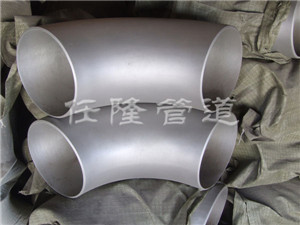
Stainless steel elbow
Product Name: Stainless Steel Elbow
Stainless steel elbows are widely used in industries such as petrochemical engineering, instrumentation, and food processing due to their excellent corrosion resistance. For professional pipe fitting manufacturers, stainless steel elbows, as high value-added products, have a direct impact on enterprise benefits in terms of quality and output. At present, all domestic pipe fitting manufacturers adopt the radial cold pressing process for processing stainless steel elbows. This process is mainly chosen because stainless steel pipe fittings feature high elongation and hot brittleness.
The passivation process for stainless steel elbows can be divided into wet and dry processes, which can be further categorized into many specific types.
The passivation effect of stamped stainless steel elbows depends on both the passivation process and the material itself. Specific influencing factors include the chemical elements contained in the stamped stainless steel elbows, their metallographic structure, and processing state. Among the constituent elements, chromium and nickel are highly passivating elements, while iron has moderate passivation properties. Therefore, the higher the content of chromium and nickel, the stronger the passivation performance of stainless steel. Austenitic and ferritic stamped stainless steel elbows have a relatively uniform microstructure and good passivation capability. Martensitic stainless steel, after heat treatment strengthening, exhibits a multi-phase metallographic structure, resulting in weak passivation performance. Stamped stainless steel elbows with smooth surfaces obtained through mechanical machining show better passivation, while rough surfaces from casting or sandblasting are unfavorable for passivation.
Unless electroplating or other coating treatments are required, all stamped stainless steel elbow parts generally undergo passivation after pretreatment (including acid pickling to remove scale, polishing, etc.) before being used as finished products or assembled into components. Passivation can enhance the thermodynamic stability of stamped stainless steel elbows in environmental media, prevent localized corrosion, ensure sufficient surface cleanliness, and eliminate oxides formed during hot working on the surface of stamped stainless steel elbows.
In the 1960s and 1970s, steel plates for stamped stainless steel elbows were mainly Grade A3 and 16Mn produced by manufacturers including Anshan Iron and Steel. With the increase in pipeline diameter and transmission pressure, the strength of pipe fitting steel plates failed to meet requirements. After the 1980s, petroleum welded pipe fitting manufacturers began to use pipeline steel plates produced in accordance with American API standards. Due to the immature technology of domestic manufacturers producing steel plates for stamped stainless steel elbows at that time, imported plates were mainly adopted.
Brand: Renlong
Origin: Yanshan County, Cangzhou City, Hebei Province
Application: Elbows are used where pipelines need to change direction, making them extremely versatile. They are widely applied in nuclear power, thermal power, wind power, hydropower, petrochemical engineering, shipbuilding, food and pharmaceuticals, paper making and printing, sewage treatment, and other fields.